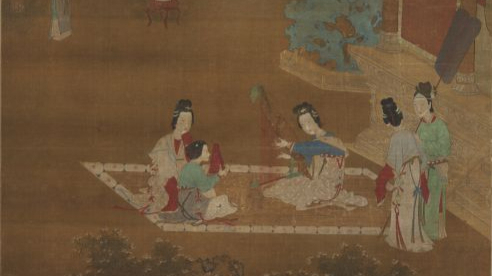
Qiu Zhu
Introduction
Qiu Zhu was a prominent figure in the world of Chinese art during the Ming Dynasty, known primarily for her exceptional skills in painting. Daughter of master painter Qiu Ying, her work reflects a profound artistic heritage. The family's origins trace back to Taicang in East China’s Jiangsu province, but they later moved to Wujun prefecture, which is present-day Suzhou. This relocation was pivotal as it placed Qiu Zhu in a flourishing cultural hub that likely influenced her artistic development. Her oeuvre predominantly features human figure paintings, with a particular focus on narrative scenes and portraits of Buddhist deities. These works are often complemented by the inclusion of landscapes and pavilions as background features. Despite the unfortunate scarcity of her surviving pieces, Qiu Zhu remains a respected figure in the annals of Chinese art history.
Historical Background
Qiu Zhu emerged during a transformative period in Chinese history, the Ming Dynasty. The Ming era was marked by a flourishing of arts and culture, during which painting reached new heights of sophistication and expression. It was an age when traditional Chinese culture and values were deeply revered, and artistic endeavors were flourishing. Qiu Ying, her father, was one of the era's celebrated painting masters, specializing in gongbi, a meticulous and detailed painting style that greatly influenced Qiu Zhu. This artistic environment provided Qiu Zhu with a rich foundation and environment to develop her own unique style. Her paintings are characterized by their fine lines and vibrant colors, reflecting the aesthetic ideals of her time. In this historical context, Qiu Zhu's work can be seen as both a continuation of traditional themes and an exploration of her own artistic voice.
Symbolism and Meaning
The works of Qiu Zhu are deeply imbued with symbolism and meaning, reflecting her keen understanding of both artistic technique and the cultural narratives of her time. Her paintings of noble women and Buddhist deities are not merely aesthetic endeavors but are also rich in symbolic content. The depiction of these figures conveys a sense of joy and tranquility, underscoring the cultural values of peace and prosperity. Moreover, her portrayal of Buddhist deities serves as an exploration of spiritual themes, offering a visual representation of religious narratives and beliefs that were significant during the Ming Dynasty. Through her work, Qiu Zhu provides a window into the symbolic language of art in her era, where each element is carefully chosen to convey deeper meanings.
Cultural Significance
Qiu Zhu's art holds significant cultural value, highlighting the role of women in the realm of Chinese painting, which was predominantly male-dominated. Her ability to capture the essence of her subjects with elegance and precision speaks to her mastery of the craft and her understanding of cultural themes. The presence of female figures in her work particularly stands out, offering a nuanced depiction of women's roles and status within the society of her time. These paintings are not only artistic expressions but also cultural artifacts that provide insight into the gender dynamics and societal values of the Ming Dynasty. Furthermore, her paintings reflect the era's reverence for nature and spirituality, as seen in her incorporation of landscapes and religious figures. Qiu Zhu’s contribution to Chinese art is invaluable, as her work continues to be celebrated for its cultural richness and historical importance.
Contemporary Usage
In contemporary times, Qiu Zhu's work is appreciated not only for its historical significance but also for its artistic merit. Her paintings are studied and admired by art historians and enthusiasts who seek to understand the evolution of Chinese art and the role of women artists within that narrative. Modern exhibitions and reproductions of her work allow new audiences to experience the beauty and complexity of her paintings. Additionally, her art serves as a source of inspiration for contemporary artists who explore traditional Chinese themes and techniques in new and innovative ways. The ongoing interest in Qiu Zhu's work underscores the timeless appeal of her artistry and the universal themes she explored through her paintings.








